



Are Doors-Off Tours Better Than Doors-On in Kauai?
- 9:43 PM
If you're booking a helicopter flight over the Garden Isle, you've probably asked yourself: are doors-off tours better than doors-on in Kauai? The honest answer is that it depends on what you want out of your hour in the air. Some guests want the wind in their face and a clear shot for photos. Others want a quieter, calmer ride with the same views through the glass. Neither choice is wrong. At Ali'i Kauai Air Tours & Charters, every private flight gives you that choice, and this guide breaks down what each option actually feels like so you can pick the one that fits your trip.
What Does a Doors-Off Helicopter Tour on Kauai Actually Mean?
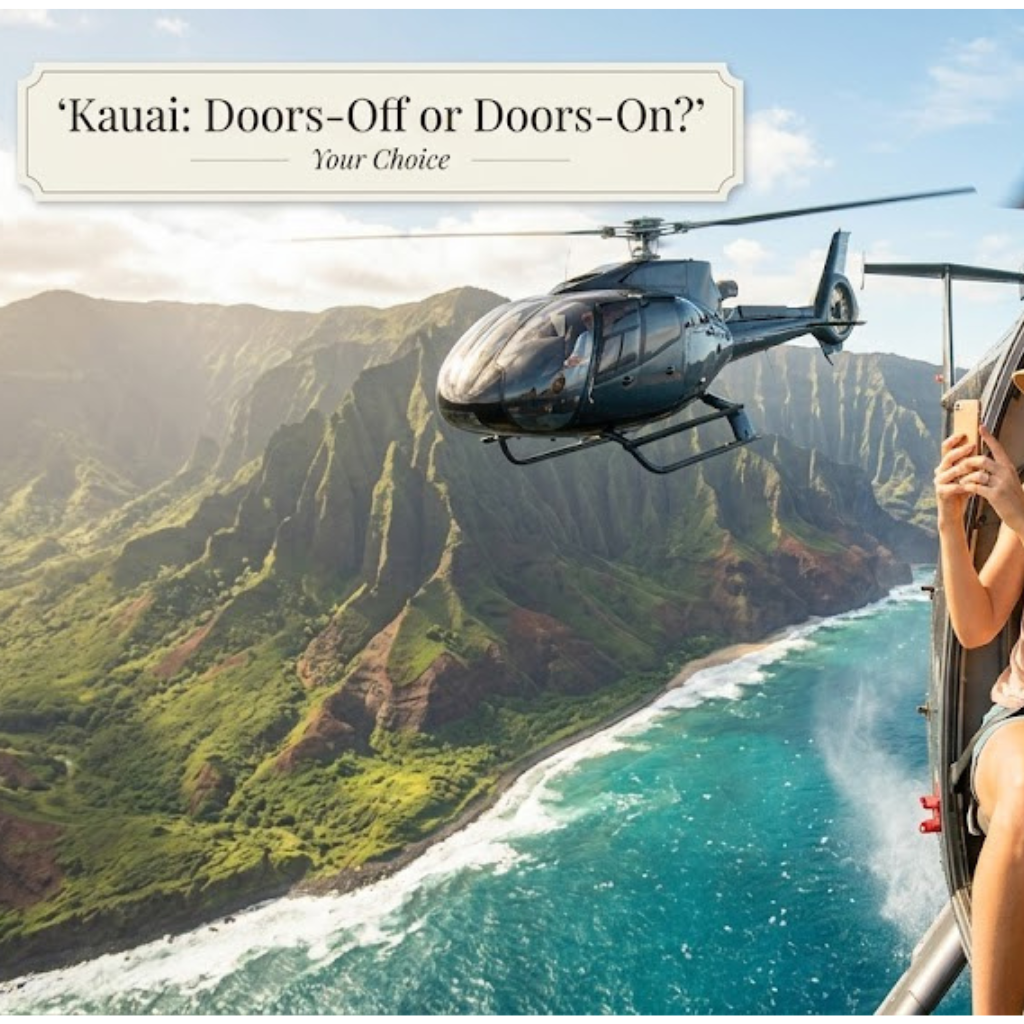
A doors-off tour is exactly what it sounds like. The helicopter flies with the side doors removed, so nothing sits between you and the island below. You feel the wind, you hear the rotors more clearly, and your camera has a completely open line of sight.
On a private tour with Ali'i, this isn't an add-on you have to request weeks in advance. It's built into the flight. You and your group decide on the day whether you want the doors on or off, and the choice can even vary seat by seat depending on who's flying with you.
For most people asking are doors-off tours better than doors-on in Kauai, the doors-off option is the one they picture when they imagine a helicopter ride over Hawaii. It's the version you see in photos of the Napali Coast with nothing but open air between the lens and the cliffs.
What Does a Doors-On Helicopter Tour on Kauai Offer Instead?
A doors-on flight keeps the cabin enclosed. You still get a window seat with a full view, but the wind noise drops and the cabin stays warmer, especially once you climb toward Mount Wai'ale'ale, where the air cools fast.
Some guests assume doors-on means a lesser experience. That's not really true. You still fly the same route over Waimea Canyon, the Napali Coast, and Hanalei Valley. What changes is comfort, not scenery. The windows on the aircraft are large, and pilots position the helicopter so every seat gets a real view, not just a glimpse.

Who Should Choose a Doors-On Kauai Helicopter Ride?
Doors-on makes sense for a few specific situations. Kids between the ages of 7 and 11 are required to keep their doors on for safety reasons, so if you're flying with younger children, this decision is already made for you.
It's also the better call for anyone nervous about flying, sensitive to wind and cold, or simply someone who wants to relax and take in the view without the sensory intensity of an open cabin. If motion or height makes you uneasy, the enclosed cabin gives you a buffer that can make the whole experience easier to enjoy.
Doors Off vs Doors On: How Do Photos and Views Compare?
This is where the two options really start to differ. With the doors off, your camera or phone shoots straight through open air. There's no glass to deal with, no glare, no reflection ruining a shot of the Manawaiopuna Falls or the sea cliffs along the Napali Coast.
With the doors on, you're shooting through a window. Modern helicopter glass is clean and well angled, so you'll still walk away with solid photos and video. But if you've ever tried to photograph anything through a car window at an angle, you know there's a difference. Doors-off removes that barrier entirely.
If photography is the main reason you're booking this flight, doors-off is generally the stronger choice. If you mainly want to see and remember the island with your own eyes, doors-on gets you there just as well.
Is a Doors-Off Kauai Helicopter Tour Safe?
Safety is usually the real question hiding behind are doors-off tours better than doors-on in Kauai. It's a fair concern, and it deserves a straight answer.
Doors-off flights are a standard, well-established offering across Hawaii, not a novelty. Ali'i operates a twin-engine aircraft, which matters specifically for tours that fly over water. Federal regulations require any commercially operated aircraft flying over water to carry a minimum of two engines, so if one fails, the aircraft can still reach a safe landing area. Not every operator on Kauai flies twin-engine, so it's worth asking before you book anywhere.
Pilots are trained for both configurations, and the removal of the doors doesn't change how the aircraft handles or how the flight is conducted. What changes is your seating experience, not the safety of the aircraft itself.
What Safety Gear Do You Wear on a Doors-Off Flight?
Once the doors come off, you're secured with a harness system built for that exact setup. It's separate from a standard seatbelt and designed to keep you firmly in place throughout the flight, even with the wind and open air around you. Staff walk you through the harness and safety procedure before you board, so you'll know exactly how it works before you're in the air.
Who Should Book a Doors-Off Tour Over Kauai?
Doors-off tours suit a specific kind of traveler. If you're comfortable with heights, don't mind wind and a bit of noise, and want the most direct connection to the landscape below, this is your flight.
It's also the right call if photography or video is a priority. Anyone hoping to capture unobstructed footage of the Wai'ale'ale Crater or the waterfalls cutting through Waimea Canyon will get a cleaner result with the doors removed.
If you're the type of traveler who wants to feel the flight, not just watch it, doors-off delivers that in a way glass can't replicate.
How Do You Decide Between Doors Off and Doors On for Your Kauai Flight?
Start with who's in your group. If you're flying with a child between 7 and 11, doors-on is already the requirement for that seat. From there, think about comfort. If wind, cold, or open-air heights make you anxious, doors-on lets you enjoy the same route without that extra layer of sensation.
If your priority is photography, or you simply want the fullest possible experience of Kauai from above, doors-off is worth the trade-off in wind and noise.
The good news is you don't have to commit to one answer months in advance. Because Ali'i flies private tours, your group can decide on the day, and even mix doors-on and doors-off seating within the same flight depending on who's sitting where. That flexibility is really the best answer to are doors-off tours better than doors-on in Kauai. The better option is whichever one matches what you and your group want to feel, see, and bring home from your hour above the Garden Isle.
*The Federal Aviation Administration requires that any commercially operated aircraft that operates over water must have a minimum of 2 engines. This is because in the event of an engine failure the aircraft can continue to fly to a suitable landing area.
Reference CFR 135.183 (c)